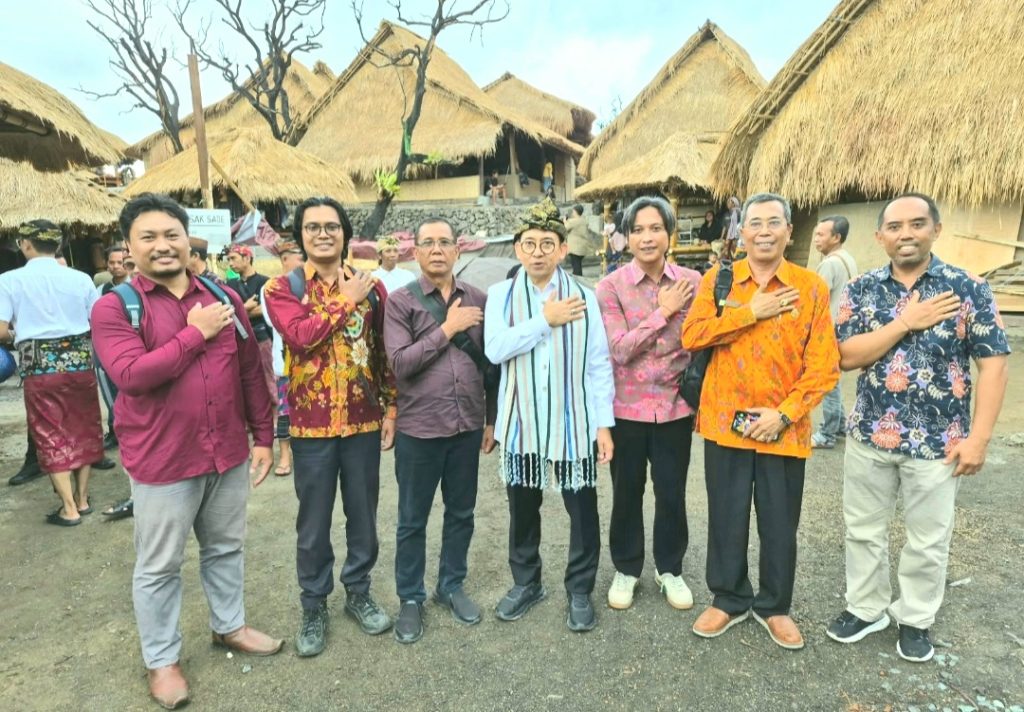
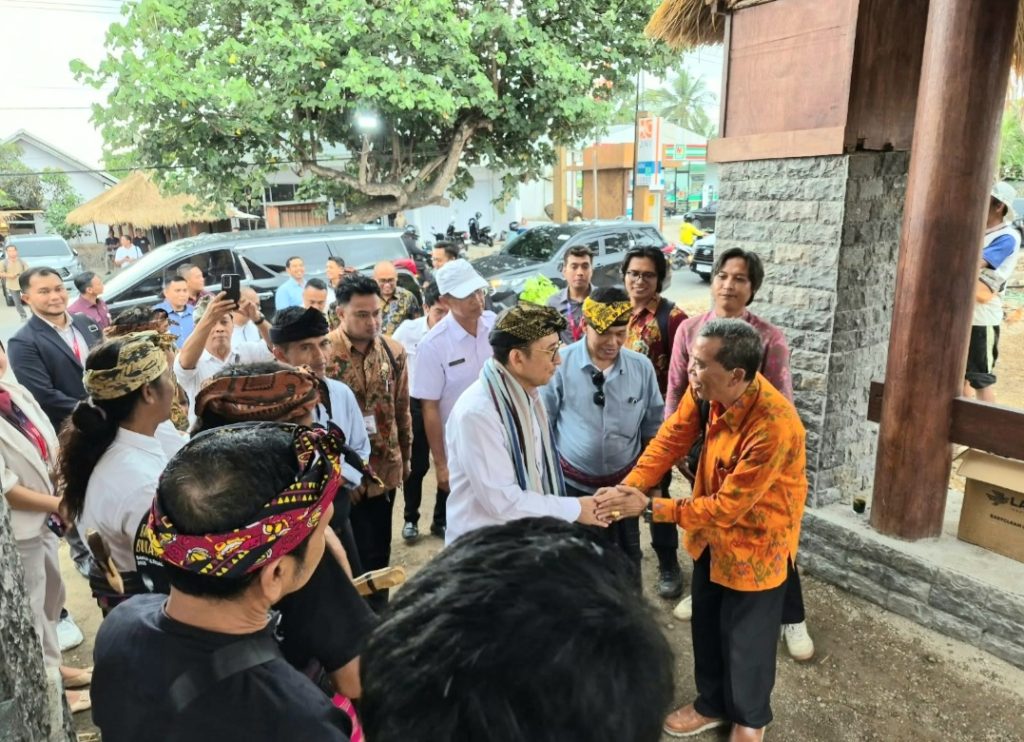
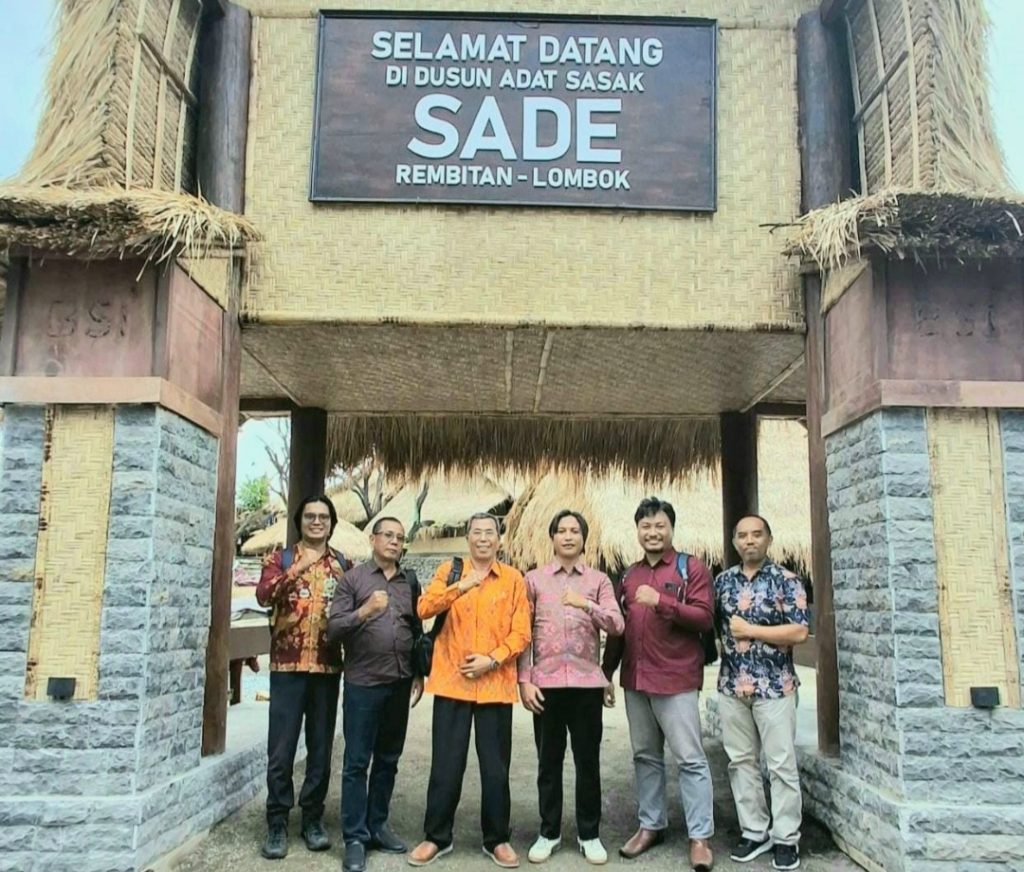
MATARAM – The recovery of Sade Traditional Village in Central Lombok following a devastating fire in August 2026 has become an important moment for strengthening collaboration between the government and higher education institutions in preserving Indonesia’s cultural heritage. On Wednesday (18 November 2026), Indonesia’s Minister of Culture, Dr. H. Fadli Zon, S.S., M.Sc., attended the groundbreaking ceremony for the revitalization of Sade Cultural Tourism Village, acknowledging the significant role of academic research in supporting the recovery and preservation of the traditional village. Six researchers from the MoRa The Air Funds research team of the State Hindu Institute (IAHN) Gde Pudja Mataram were also present to accompany the Minister during the event.
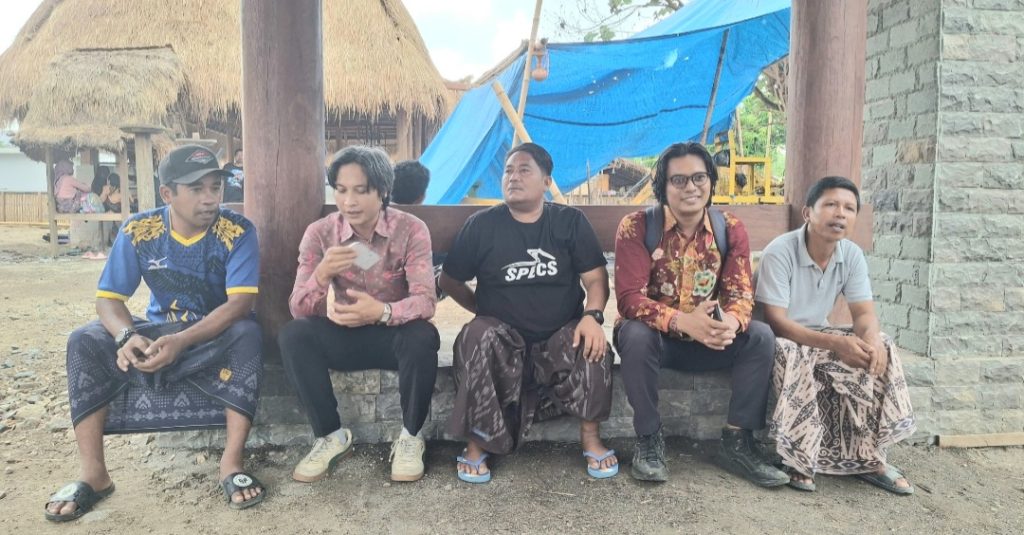
The six-member research team comprised Prof. Dr. Gusti Ngurah Ketut Putera, S.Ag., M.Pd.; Dr. I Wayan Agus Gunada, S.Pd.H., M.Pd.; Putu Gede Asnawa Dikta, S.Pd., M.Pd.; Dr. I Made Ngurah Oka Mahardika, M.M.; I Gusti Komang Kembarawan, S.Ag., M.Ag.; and I Made Sudarma, S.E., M.Pd.H. Their participation reflects IAHN Gde Pudja Mataram’s academic engagement in supporting the preservation and recovery of Sasak cultural heritage through research-based approaches. During the visit, Minister Fadli Zon expressed his appreciation for the contribution of academic research to the revitalization process. Scientific studies, he emphasized, are essential to ensuring that the reconstruction of Sade goes beyond restoring physical structures. Equally important is safeguarding the cultural values, traditional practices, and local knowledge that have been passed down through generations of the Sasak community.
The Minister’s recognition highlights the strategic role of universities in supporting cultural preservation and public policy through research grounded in local wisdom. It also reinforces the importance of connecting academic knowledge with the real needs of communities, particularly in addressing challenges related to cultural identity and heritage sustainability. The devastating fire struck Sade Traditional Village, located in Rembitan Village, Pujut District, Central Lombok, on the night of 22 August 2026. The incident was among the most severe fires in the village’s history. According to data from the Ministry of Culture, a total of 167 buildings were affected, including 75 traditional houses, 65 kiosks, and one mosque, along with other structures. Although no casualties were reported, the fire caused extensive damage to a settlement that represents an important part of Sasak cultural heritage. The traditional houses of Sade are far more than residential structures. Some have stood for hundreds of years, preserving the cultural legacy of approximately 15 generations. Built using bamboo, timber, woven bamboo walls, and thatched roofs, these houses embody the distinctive architectural traditions of the Sasak people. Their destruction therefore represents not merely material loss, but also a serious challenge to the continuity of a valuable historical and cultural legacy.
The government has emphasized that the revitalization of Sade will not simply involve rebuilding the structures that were destroyed. The recovery plan includes reorganizing the settlement to improve safety and sustainability, including creating greater distances between houses and installing fire protection infrastructure to reduce the risk of similar incidents in the future. At the same time, the village’s distinctive architectural character and cultural identity will remain central to the revitalization process, with the active involvement of the local customary community in determining its future development. The reconstruction is estimated to require a budget of approximately IDR 25–30 billion, following President Prabowo Subianto’s directive to accelerate the recovery of Sade.
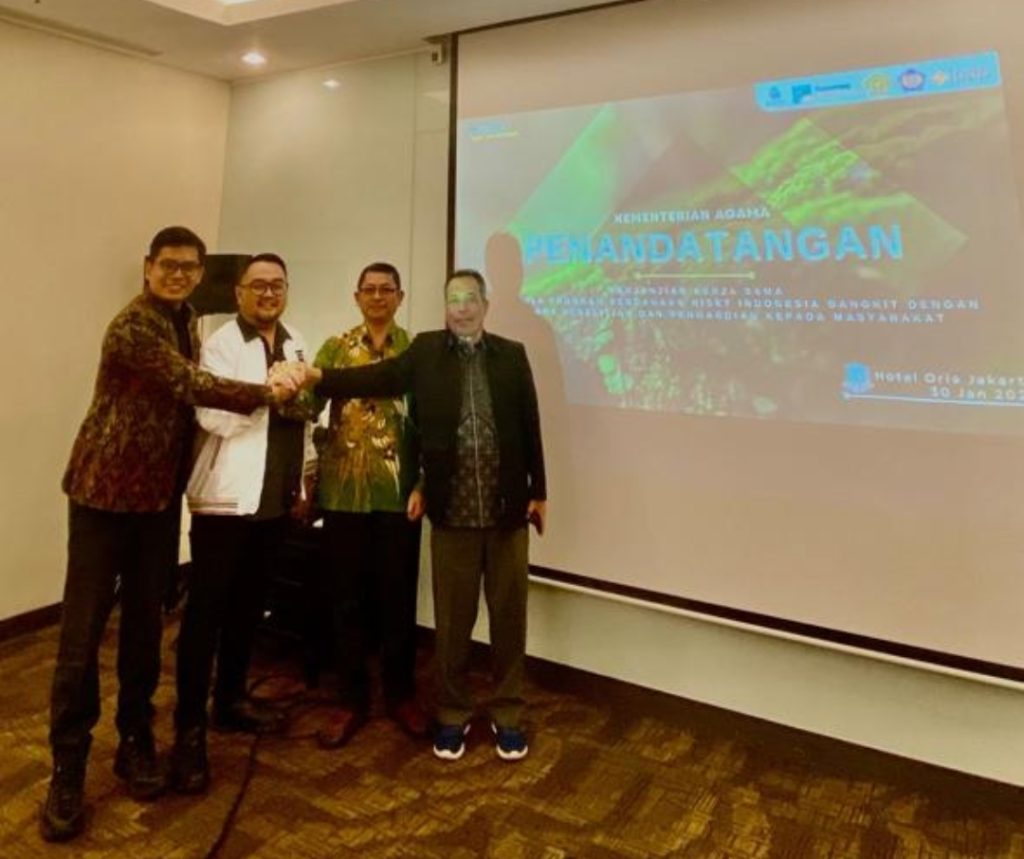
The local community has also taken initiatives to restore the village through the Nyemulak traditional ceremony, held in early September 2026 as a symbolic beginning of the reconstruction of traditional houses. Government assistance has further supported the recovery process, including IDR 1 billion in aid from the Ministry of Tourism to help revive the livelihoods and economic activities of affected residents. In this broader recovery effort, the involvement of IAHN Gde Pudja Mataram’s MoRa The Air Funds research team represents an important contribution from the academic community. MoRa The Air Funds is a research funding scheme initiated by the Ministry of Religious Affairs and managed in collaboration with the Indonesia Endowment Fund for Education (LPDP). The program promotes collaborative, innovative, and impactful research that delivers tangible benefits to society.
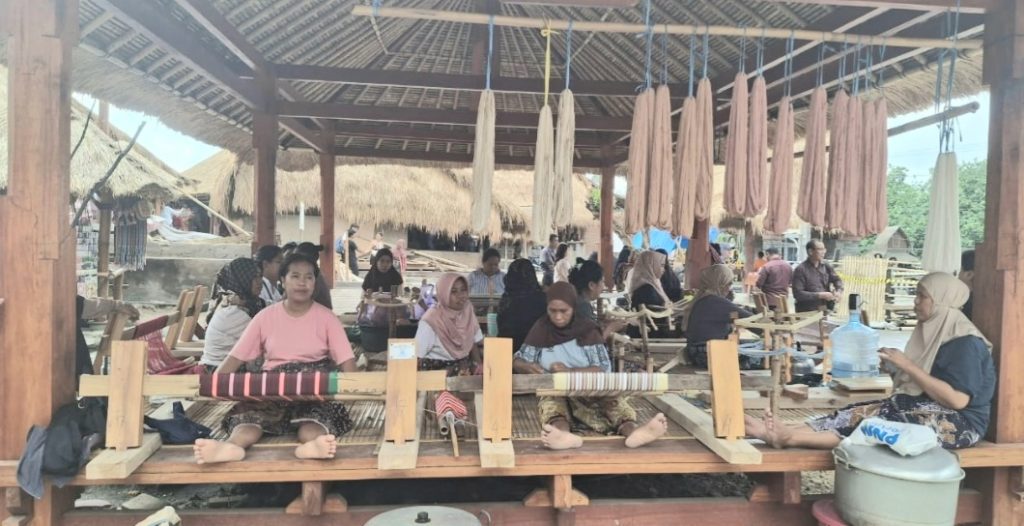
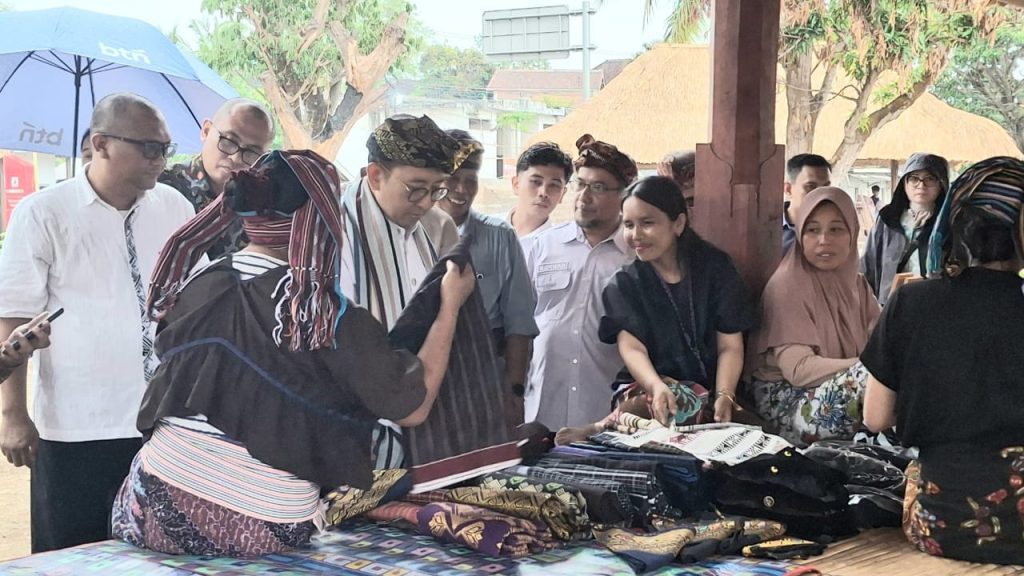
For IAHN Gde Pudja Mataram, this engagement reflects the university’s commitment to implementing the Three Pillars of Higher Education (Tri Dharma Perguruan Tinggi), particularly in research and community service. Beyond producing academic publications and institutional achievements, universities are expected to generate knowledge that responds to social and cultural challenges and contributes to practical solutions for communities. Located approximately 43 kilometers from Mataram City, Sade is one of Lombok’s prominent cultural tourism destinations. The village is widely recognized for its traditional architecture, handwoven textiles, and living Sasak cultural traditions. Established as a tourist village in 1982, Sade represents not only an important destination for cultural tourism but also a living space where the identity, knowledge, and cultural practices of the Sasak people continue to thrive.
Through this revitalization initiative, the recovery of Sade is expected to become an example of how cultural heritage preservation can be integrated with community safety, economic sustainability, and the continuity of local traditions.
For IAHN Gde Pudja Mataram, the participation of its MoRa The Air Funds research team further strengthens the institution’s commitment to becoming a responsive, research-driven, and community-oriented higher education institution. By bringing academic expertise into real-world cultural preservation efforts, IAHN Gde Pudja Mataram continues to demonstrate that meaningful research should not remain confined to academic discourse, but should contribute directly to society and the preservation of Indonesia’s cultural heritage.
(By:DKS)