A meaningful blend of spirituality, environmental awareness, and cultural preservation came to life as IAHN Gde Pudja Mataram held a special eco-theological program in celebration of Tumpek Wariga on May 23, 2026, at the historic Mayura Park in Mataram. Carrying the theme “Harmony with Nature: Nurturing Life through Tumpek Wariga-Based Eco-Theology toward Sustainable SDGs,” the event reflected the institution’s growing commitment to integrating Hindu values, ecological responsibility, and sustainable development within academic and community engagement activities.
The program brought together structural and functional officials of IAHN Gde Pudja Mataram, student representatives, community leaders, and cultural stakeholders. Among the distinguished guests were Dr. Anak Agung Ketut Sudarmawan, Chairman of Krama Pura Jagatnatha Mayura, and Anak Agung Made Djelantik Agung Barayang Wangsa, caretaker of Mayura Park and a direct descendant of the Mataram royal lineage of the Karangasem Kingdom. The day began with a collective prayer ceremony at Pura Jagatnatha Mayura led by the temple priest. The sacred atmosphere highlighted the philosophical essence of Tumpek Wariga, a Hindu holy day dedicated to honoring plants and the natural world as manifestations of divine life. Through this spiritual approach, participants were reminded that environmental care is not merely a social responsibility, but also a sacred duty rooted in religious consciousness.
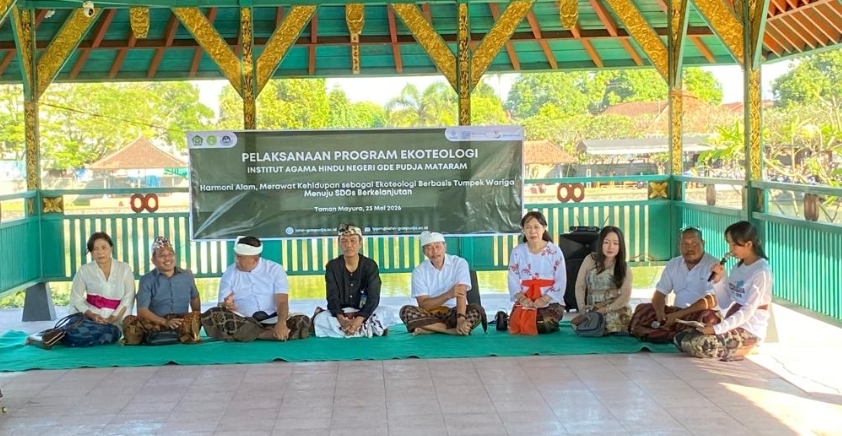
Following the prayer session, the ceremonial program continued at Bale Kambang within the Mayura Park complex. Chairman of the organizing committee, I Wayan Sudiana, S.Pd.H., M.Pd.H., expressed gratitude to all supporting parties who contributed to the success of the event. He particularly appreciated the collaboration with the management of Mayura Park and the Krama Pura Jagatnatha Mayura community for strengthening the partnership between the campus and cultural institutions.
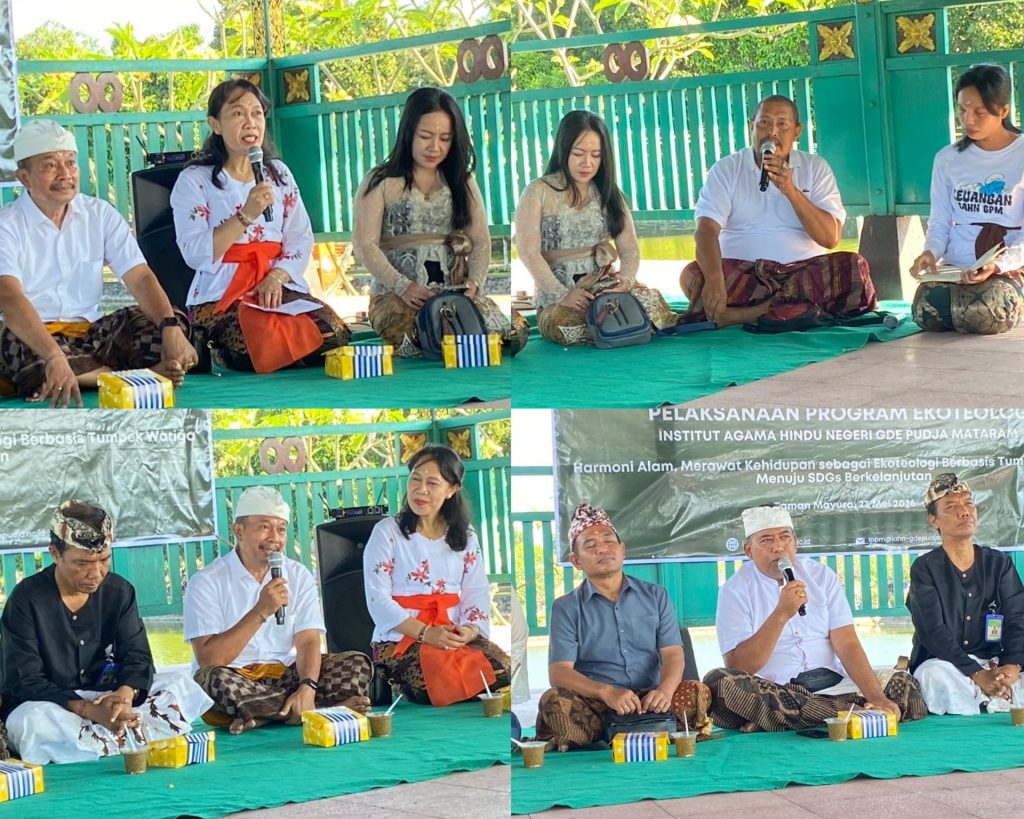
The Head of the Institute for Research and Community Service (LPPM), Dr. Ni Luh Sinar Ayu Ratna Dewi, SS., M.Ag., emphasized that the program represented a concrete contribution toward the United Nations Sustainable Development Goals (SDGs). She explained that the activities aligned closely with SDG 13 on Climate Action, SDG 15 on Life on Land, SDG 11 on Sustainable Cities and Communities, and SDG 17 on Partnerships for the Goals through collaborative environmental preservation initiatives involving academia, cultural heritage institutions, and the wider community.
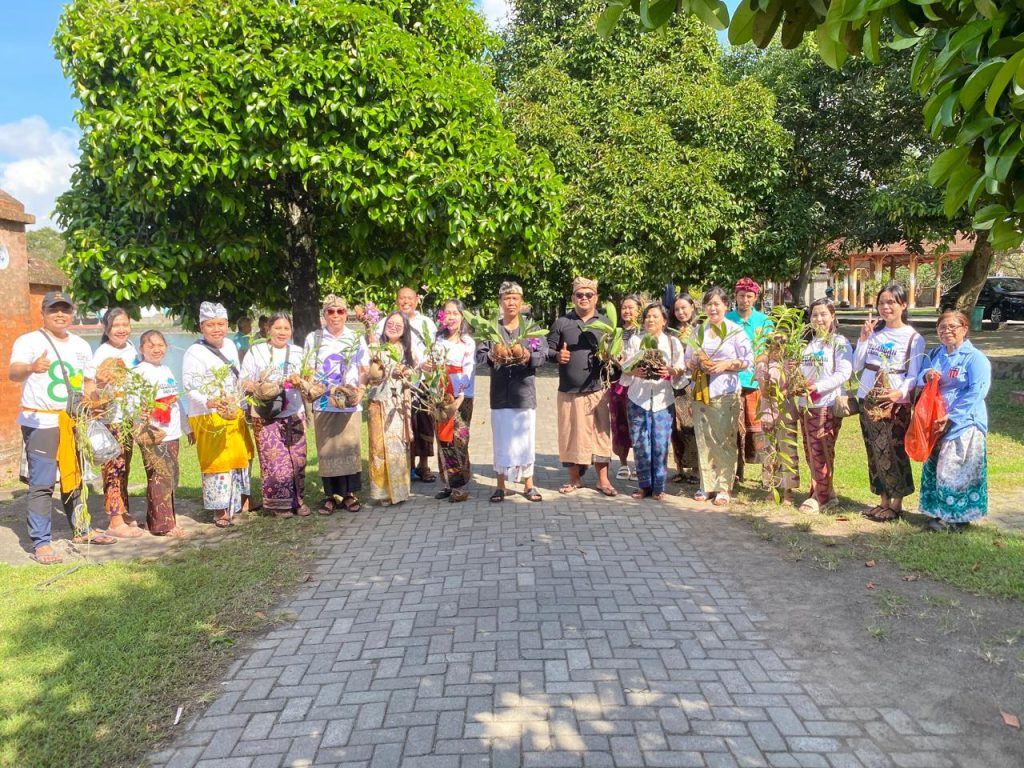
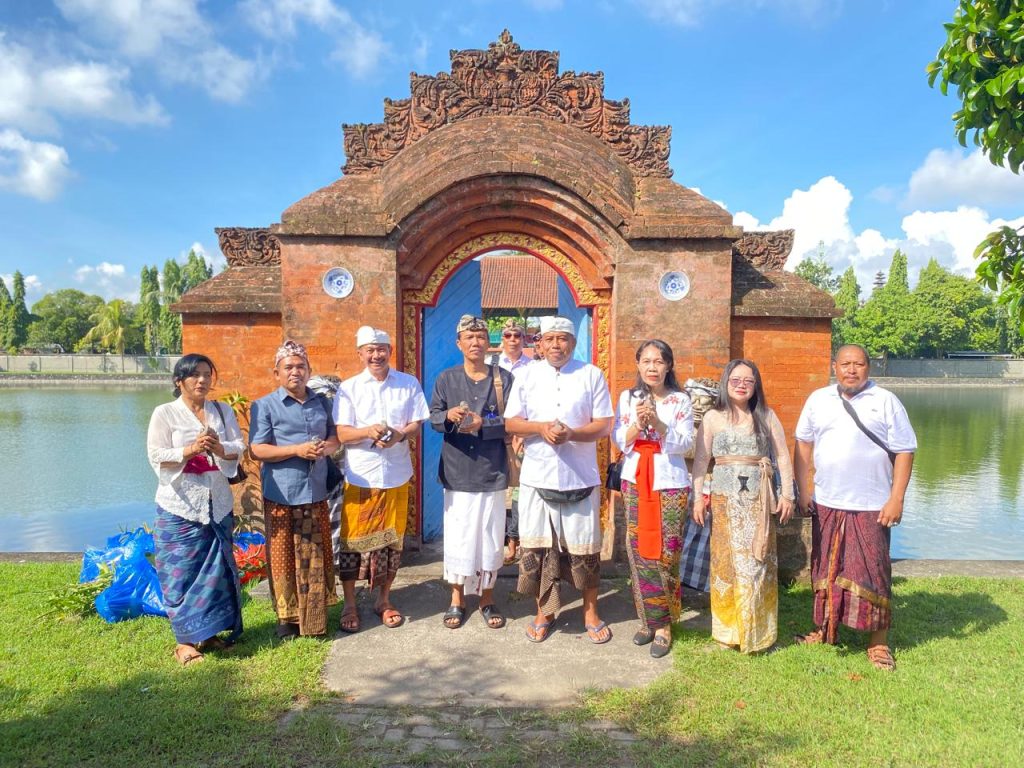
In his remarks, Dr. Anak Agung Ketut Sudarmawan shared the historical significance of Pura Jagatnatha Mayura as one of the spiritual and cultural landmarks in Mataram. He praised the continuous collaboration fostered by IAHN Gde Pudja Mataram and expressed hope that the longstanding relationship between the institution and local cultural communities would continue to flourish in the future. Meanwhile, Anak Agung Made Djelantik Agung Barayang Wangsa introduced participants to the rich history of Mayura Park, describing it as an important cultural heritage site inherited from the Karangasem Kingdom. He encouraged all attendees to actively participate in preserving the environmental and historical value of the area for future generations.
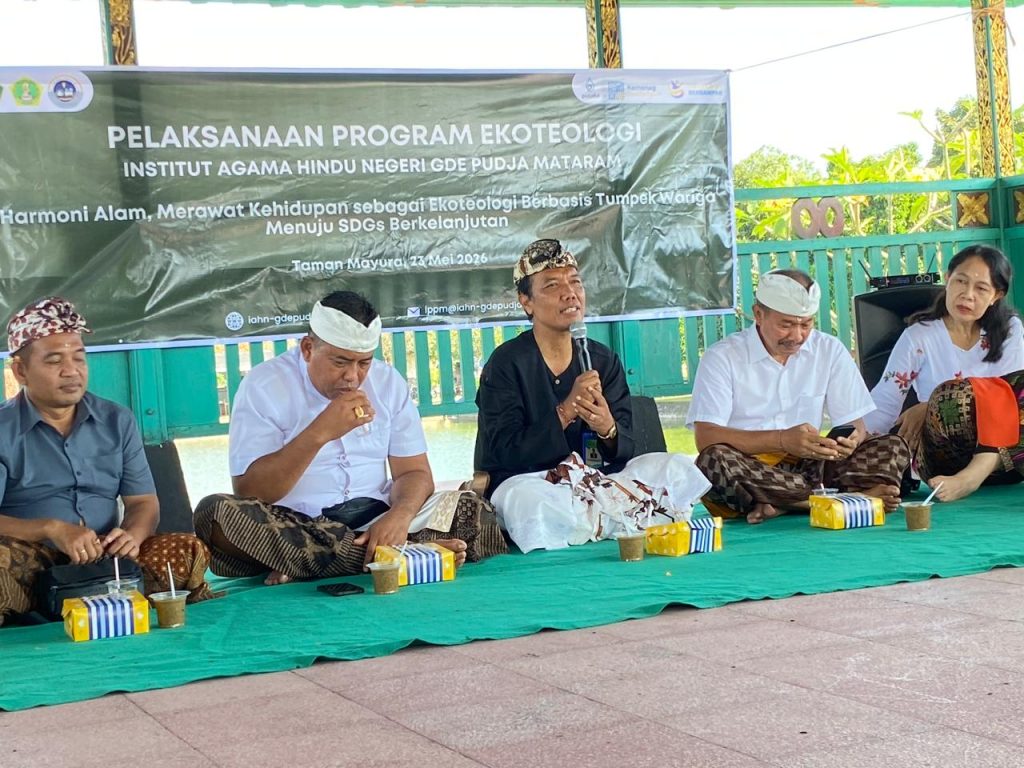
The event was officially opened by the Rector of IAHN Gde Pudja Mataram, Prof. Dr. Ir. I Wayan Wirata, A.Ma., S.E., M.Si., M.Pd. In his speech, he highlighted Tumpek Wariga as more than a ceremonial tradition, describing it as a profound ecological philosophy that teaches harmony between humanity, nature, and the Divine. He further noted that higher education institutions today are expected not only to excel academically, but also to become moral and spiritual driving forces in addressing environmental challenges and promoting sustainable living. He also conveyed appreciation to the organizing committee and all collaborating partners for their dedication in carrying out the meaningful program.
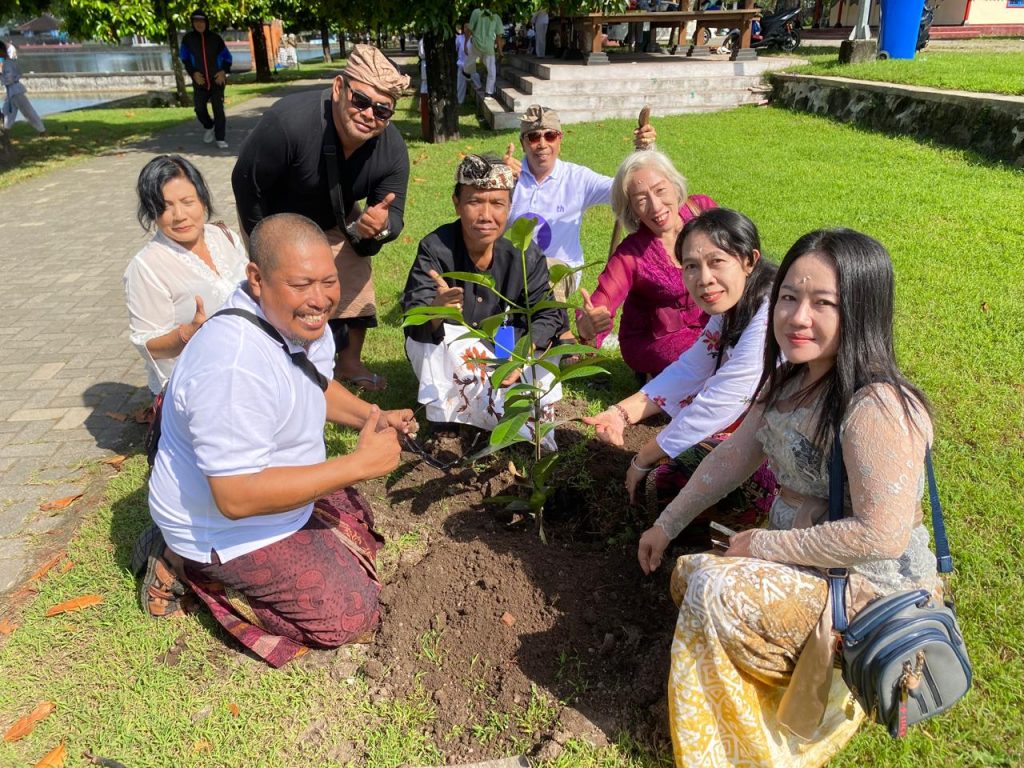
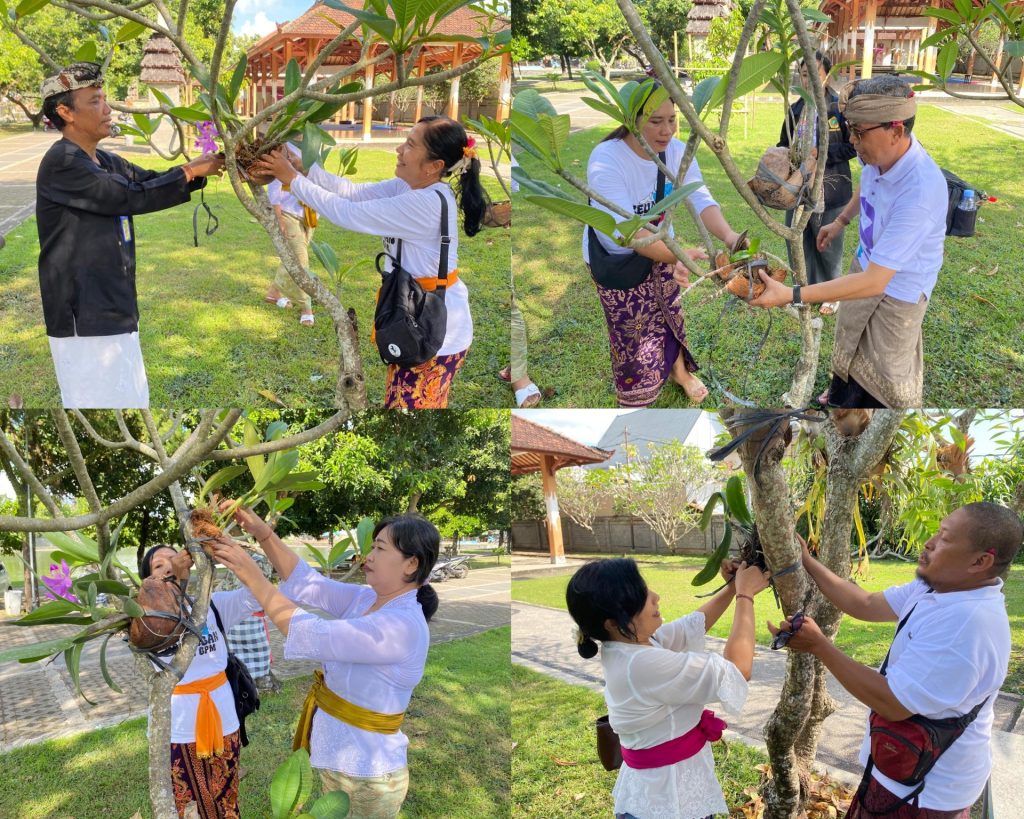
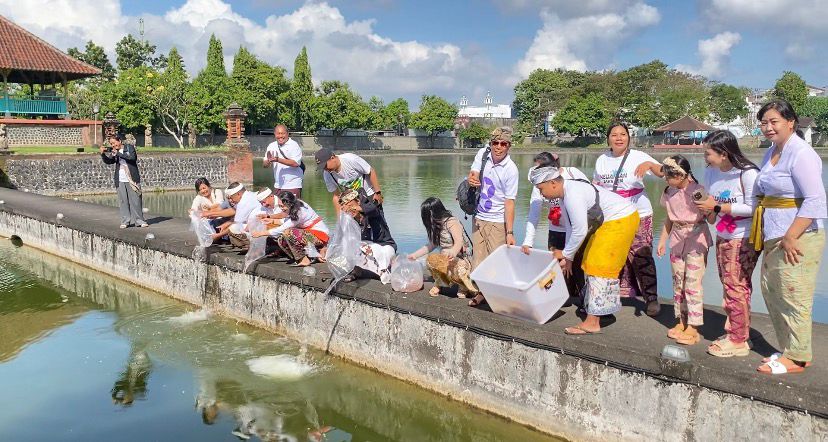
As a symbol of environmental stewardship, the event concluded with tree planting activities around the Mayura Park area, followed by the release of fish into the park’s pond and birds into the open environment. These symbolic acts reflected a shared commitment to preserving ecological balance and nurturing harmony between humans and nnature
Filled with warmth, togetherness, and collective spirit, the entire program demonstrated how cultural wisdom, spiritual values, and academic engagement can work hand in hand in building a more sustainable future. Through initiatives such as this, IAHN Gde Pudja Mataram continues to strengthen its identity as a campus that promotes religious values, environmental awareness, and community-centered transformation on both local and global levels. (by: DKS)