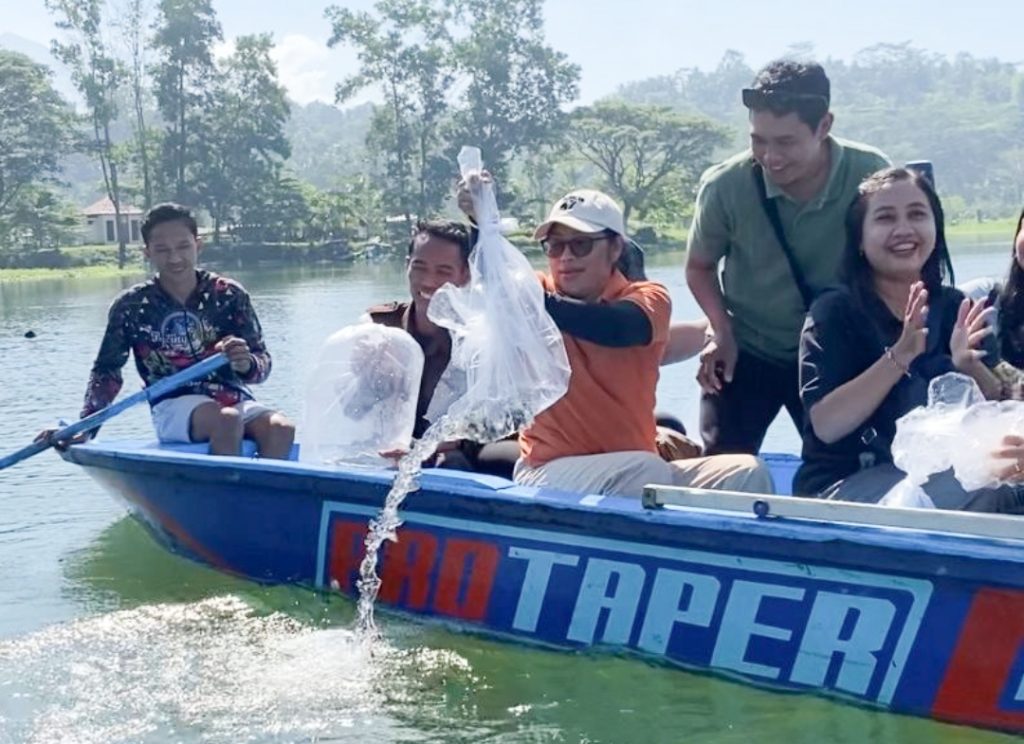
West Lombok, May 9, 2026 — The Department of Dharma Duta at Institut Agama Hindu Negeri (IAHN) Gde Pudja Mataram served as both the initiator and host of a community service program involving multiple study programs across the institution. Held at Gunung Jae Dam in Sedau Village, Narmada District, the initiative highlighted collaboration, environmental awareness, and the integration of spiritual values into real-world action.
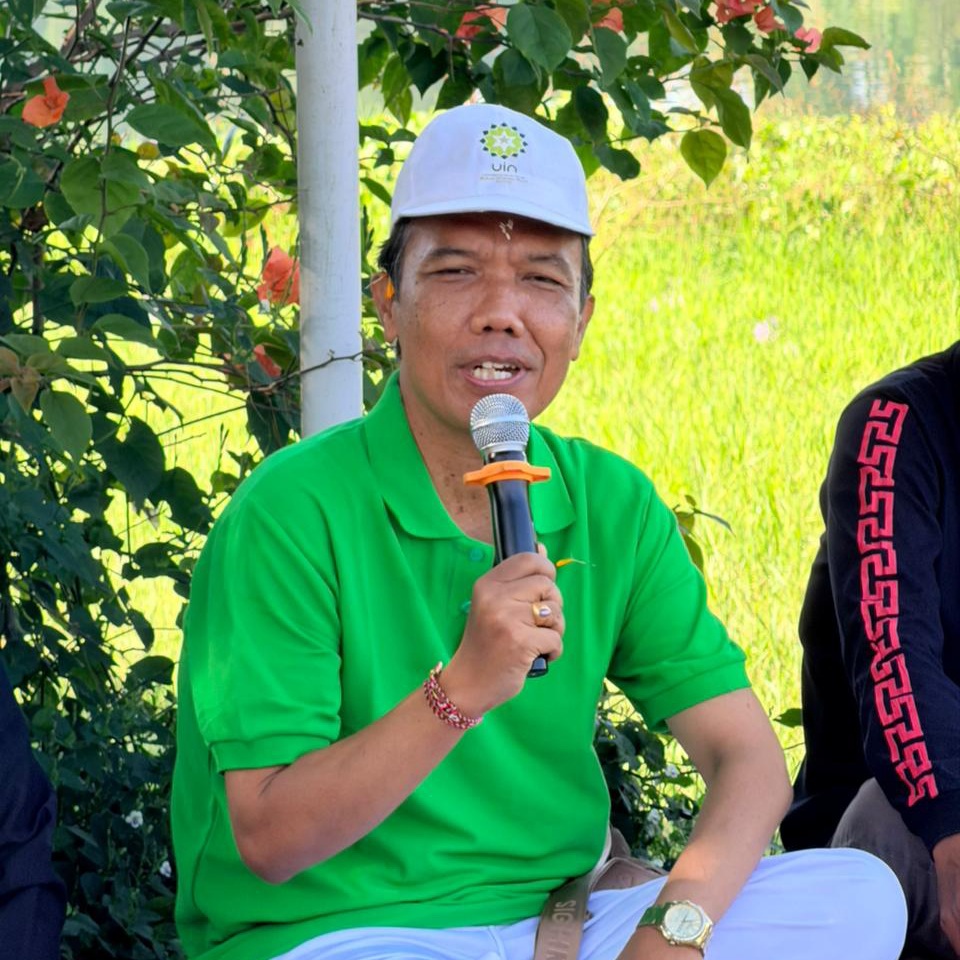
The activity began with a collective clean-up movement around the dam area, involving the entire academic community, i.e., lecturers, students, and institutional staff. This hands-on action set the tone for the day, reflecting the values of ngayah (selfless service) while directly contributing to environmental preservation.
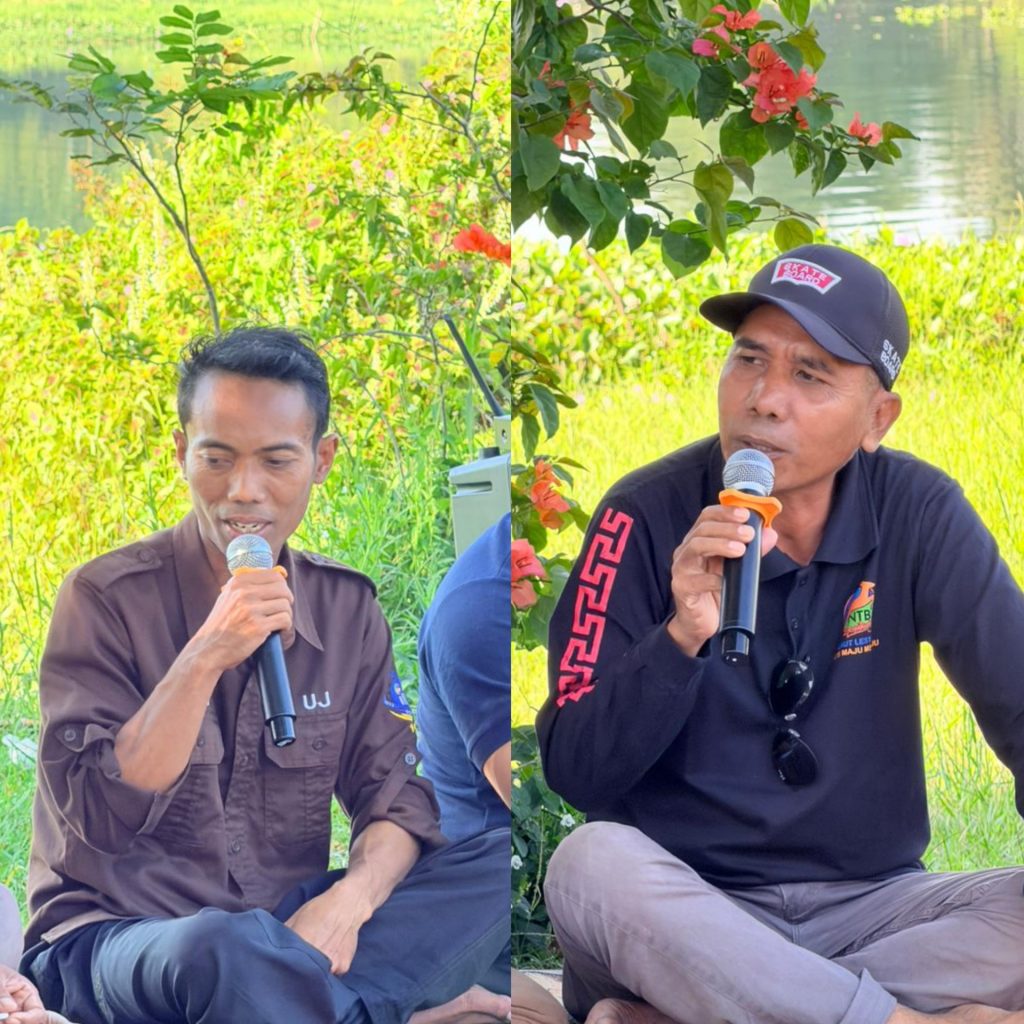
The formal session opened with remarks from the Head of BUMDes Sedau Village, Mr. Usman Jayadi, who warmly welcomed the initiative. He expressed his deep appreciation to IAHN Gde Pudja Mataram for choosing Gunung Jae Dam as the site of the community service program. He also extended gratitude for the support provided, including cleaning equipment and the release of 50,000 freshwater fish seeds. According to him, these contributions will significantly strengthen the ecological resilience of the dam and support the sustainability of the surrounding environment.

The next speech was delivered by the Head of the Organizing Committee, I Made Sugita Darmateja M.Tr.Par., who shared the journey behind the realization of the program. He explained that the activity was initiated through cross-study program collaboration within IAHN Gde Pudja Mataram, driven by a shared vision to integrate academic service with ecological responsibility. In a heartfelt note, he expressed his gratitude for being entrusted with the role of committee chair, despite his current status as a civil servant candidate (CPNS). He also conveyed appreciation to the university leadership, local partners, government agencies, and all participants whose support ensured the success of the program.

Further strengthening the academic perspective, the Head of the Institute for Research and Community Service (LPPM), Dr. Ni Luh Sinar Ayu Ratna Dewi, S.S., M.Ag. highlighted the program’s alignment with the Sustainable Development Goals (SDGs). She emphasized its contribution to SDG 6 (Clean Water and Sanitation), SDG 13 (Climate Action), SDG 14 (Life Below Water), and SDG 15 (Life on Land). She noted that such initiatives demonstrate how higher education institutions can actively bridge global sustainability agendas with local community empowerment. She also extended her sincere appreciation to all parties involved.
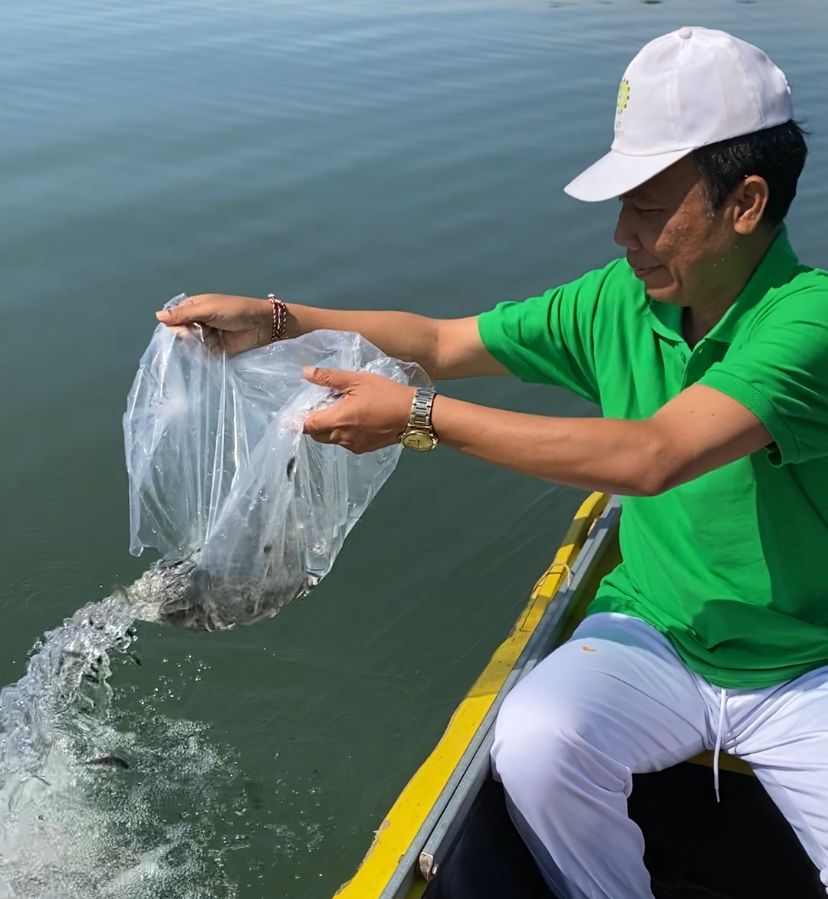
The Rector of IAHN Gde Pudja Mataram, Prof. Dr. Ir. I Wayan Wirata, A.Ma., S.E., M.Si., M.Pd., then officially opened the event. In his address, he underscored the urgency of sustained environmental conservation efforts, particularly those rooted in spiritual values such as ecotheology. He emphasized that preserving nature is not merely a responsibility, but a sacred duty that must be embraced collectively. He concluded by expressing gratitude to all stakeholders who contributed to the success of the initiative.Carrying the theme “Implementation of Ecotheology through Freshwater Fish Restocking: Preserving Aquatic Ecosystems to Support the Ministry of Religious Affairs’ Asta Protas Program,” the activity seamlessly combined education and action.
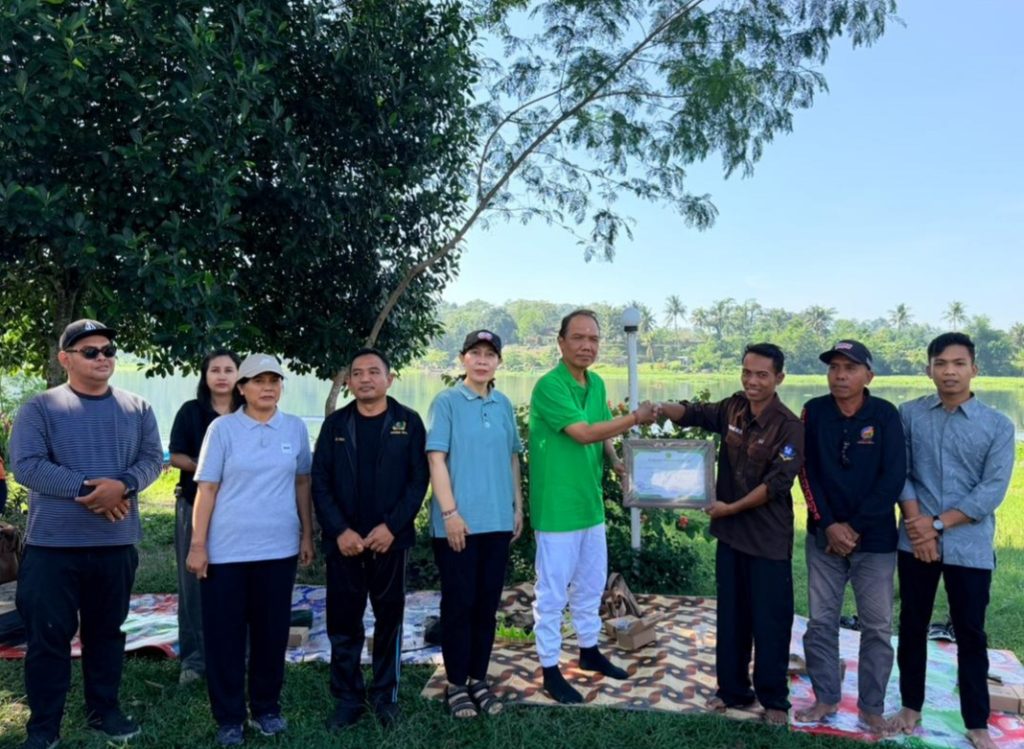
Participants took part in insightful sessions on freshwater fish conservation led by representatives from the Provincial Marine and Fisheries Office, Mr. Lalu Senang, S.Pi., followed by a discussion on ecotheological values and their relevance in addressing contemporary environmental challenges.A symbolic handover of cleaning equipment to BUMDes Sedau Village and the awarding of appreciation certificates further reinforced institutional collaboration. The highlight of the event was the release of 50,000 freshwater fish seeds into the dam—an impactful step toward restoring ecological balance and enhancing local biodiversity.
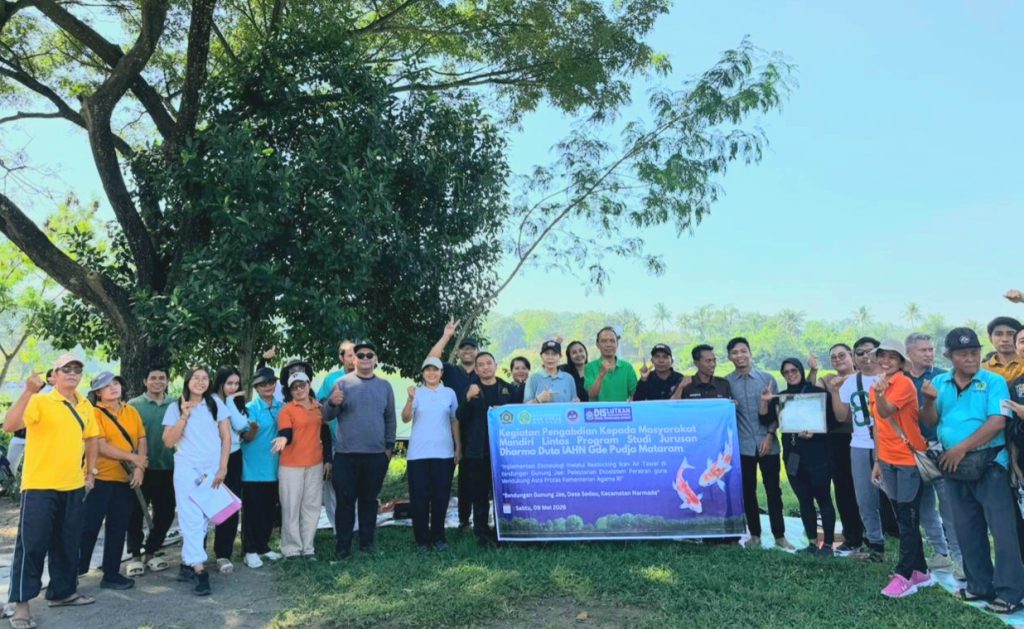
Through this initiative, IAHN Gde Pudja Mataram continues to affirm its role as a forward-looking higher education institution, one that not only excels academically but also actively contributes to environmental sustainability and community empowerment. By integrating knowledge, spirituality, and real-world action, the campus is shaping a generation that is both intellectually capable and deeply committed to the well-being of the planet.
(by DKS)